

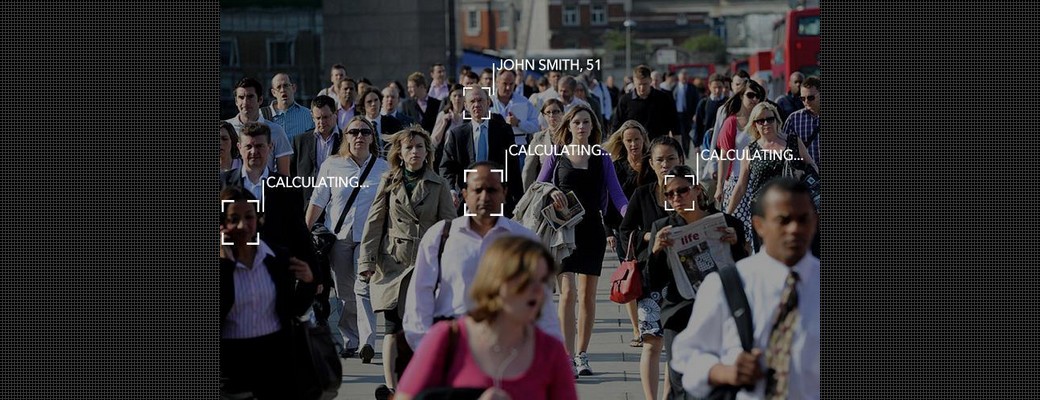
According to the Electronic Frontier Foundation (EFF), a proposed amendment to the Chicago municipal code would allow businesses to use facial recognition technology that could “invade biometric and location privacy, and violate a pioneering state privacy law adopted by Illinois a decade ago.”
EFF goes on to say:
"At its core, facial recognition technology is an extraordinary menace to our digital liberties. Unchecked, the expanding proliferation of surveillance cameras, coupled with constant improvements in facial recognition technology, can create a surveillance infrastructure that the government and big companies can use to track everywhere we go in public places, including who we are with and what we are doing.
This system will deter law-abiding people from exercising their First Amendment rights in public places. Given continued inaccuracies in facial recognition systems, many people will be falsely identified as dangerous or wanted on warrants, which will subject them to unwanted—and often dangerous—interactions with law enforcement. This system will disparately burden people of color, who suffer a higher 'false positive' rate due to additional flaws in these emerging systems."

Additionally, EFF argues the ordinance would also violate the Illinois Biometric Information Privacy Act (BIPA). The law requires companies to gain informed, opt-in consent from individuals prior to collecting biometric information from them, or disclosing it to a third party. It also requires secure storage for the biometric information and sets a three-year limit on retention of the information. After that it must be deleted.
The proposal seeks to add a section on “Face Geometry Data” to the city’s municipal code which would allow businesses to use the controversial face surveillance systems pursuant to licensing agreements with the Chicago Police Department. The Illinois Biometric Information Privacy Act is the most potent law that shields people from facial recognition technology (in the private sector) in the US. Texas has also enacted a strong biometric privacy law.
The use of facial recognition software in the private sector is growing exponentially. For instance, EFF reports that, "FaceFirst " sells systems that retailers use to identify the people entering their stores, and assess whether (in the words of Face First) they are 'bad guys' likely to shoplift or 'good customers' who should be made more welcome." And, Churchix provides systems that allow houses of worship to pinpoint who is attending their worship services. Analysts expect the global market for facial recognition technologies to reach $6 billion by 2020.
Under the Illinois statute, Facebook is now facing litigation. The plaintiffs are Illinois residents whose biometric identifiers Facebook collected. Of issue is Facebook’s “tag suggestions” feature, in which Facebook uses facial recognition technology to identify people appearing in photos uploaded to Facebook every day.
Biometric Databases Interoperability to Be Implemented For First Time
EFF has also been uneasy in regard to the FBI's assembling of a massive database of biometric information on Americans. Next Generation Identification (NGI) includes fingerprints, face recognition, iris scans and palm prints. The information is gathered during arrests and non-criminal cases such as immigration, background checks and state licensing.
EFF elaborates:
"Just last year, the FBI announced that for the first time it would combine almost all of this non-criminal data with its criminal data in NGI. This means that now, if you submit fingerprints for licensing or for a background check, they’ll most likely end up living indefinitely in NGI—to be searched thousands of times a day for any crime, no matter how minor, by over 20,000 law enforcement agencies across the country and around the world."
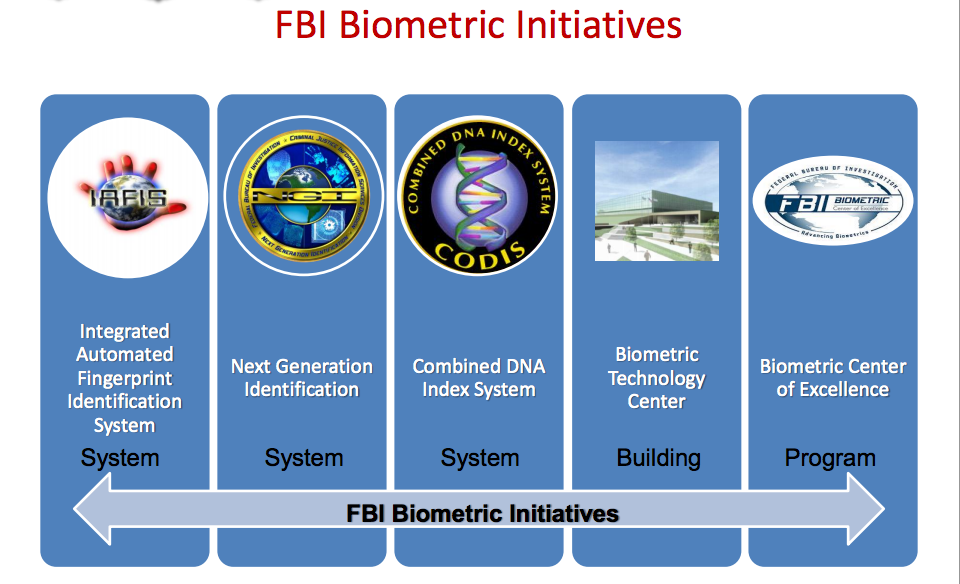
And, in the latest development surrounding government biometric databases, the biometric databases held by the US Department of Defense, the FBI and the Department of Homeland Security will be able to communicate with each other seamlessly for the first time ever. This communication will take place once a new standard for encoding biometric information is approved in 2019.
The new standard is known as Electronic Biometric Transmission Specification (EBTS) version 4.1 and although fingerprints will continue to be the FBI’s primary mode of identification for the near future, the scope of the EBTS has been increased to include additional biometric modalities such as iris, palm and facial.
While facial recognition technology, and biometric technology in general, holds tremendous potential for increased safety, national security and improvements to cybersecurity, many have cautioned the technology needs to be improved upon before its continued use.
The Drawbacks of Facial Recognition
- According to the DHS Inspector General's report, "U.S. citizens accounted for the lowest biometric confirmation rate." A report obtained by EPIC last year through a Freedom of Information Act lawsuit revealed that iris imaging and facial recognition for border control did not perform at a "satisfactory" level. In a statement to Congress earlier this year, EPIC warned that biometric identification techniques are unreliable and lack proper privacy safeguards.
- Here’s What Happens When We Allow Facial Recognition Technology in Our Schools
- Amazon’s Face Recognition Falsely Matched 28 Members of Congress With Mugshots
- A Looming Implication of Face Recognition: Private Photo Blacklists
- As reported widely in recent months, biases have been found in the performance of several fielded face recognition technologies. The technologies worked more accurately for white men than for white women and were more accurate in identifying persons with lighter complexions than people of color.
- Facial recognition, like many AI technologies, typically have some rate of error even when they operate in an unbiased way. And the issues relating to facial recognition go well beyond questions of bias themselves, raising critical questions about our fundamental freedoms.
- In one example in the US, a Denver man was arrested two separate times in connection with two bank robberies perpetrated by someone who looked like him in CCTV footage, but was later determined to be someone else.
EFF announced that it will continue to challenge any efforts to circumvent the Illinois statute regarding facial surveillance systems and invites the public to join its efforts.

Break down IAM silos like Bitpanda, KnowBe4, and PathAI
Broken IAM isn't just an IT problem - the impact ripples across your whole business.
This practical guide covers why traditional IAM practices fail to keep up with modern demands, examples of what "good" IAM looks like, and a simple checklist for building a scalable strategy.






Comments
Warthog-Fan - 7 years ago
George Orwell knew what he was talking about. His predictions were only off by a few decades.
Candice_Lanier - 7 years ago
Very true.