


Microsoft will begin to ship an in-house custom built Linux kernel starting with the Windows 10 Insider builds this summer. This kernel is to become the backbone for the new Windows Subsystem for Linux 2.0 or WSL2.
Unlike WSL1, which used a Linux-compatible kernel, WSL2 will use a genuine open-source kernel compiled from the stable 4.19 version release of Linux at Kernel.org.
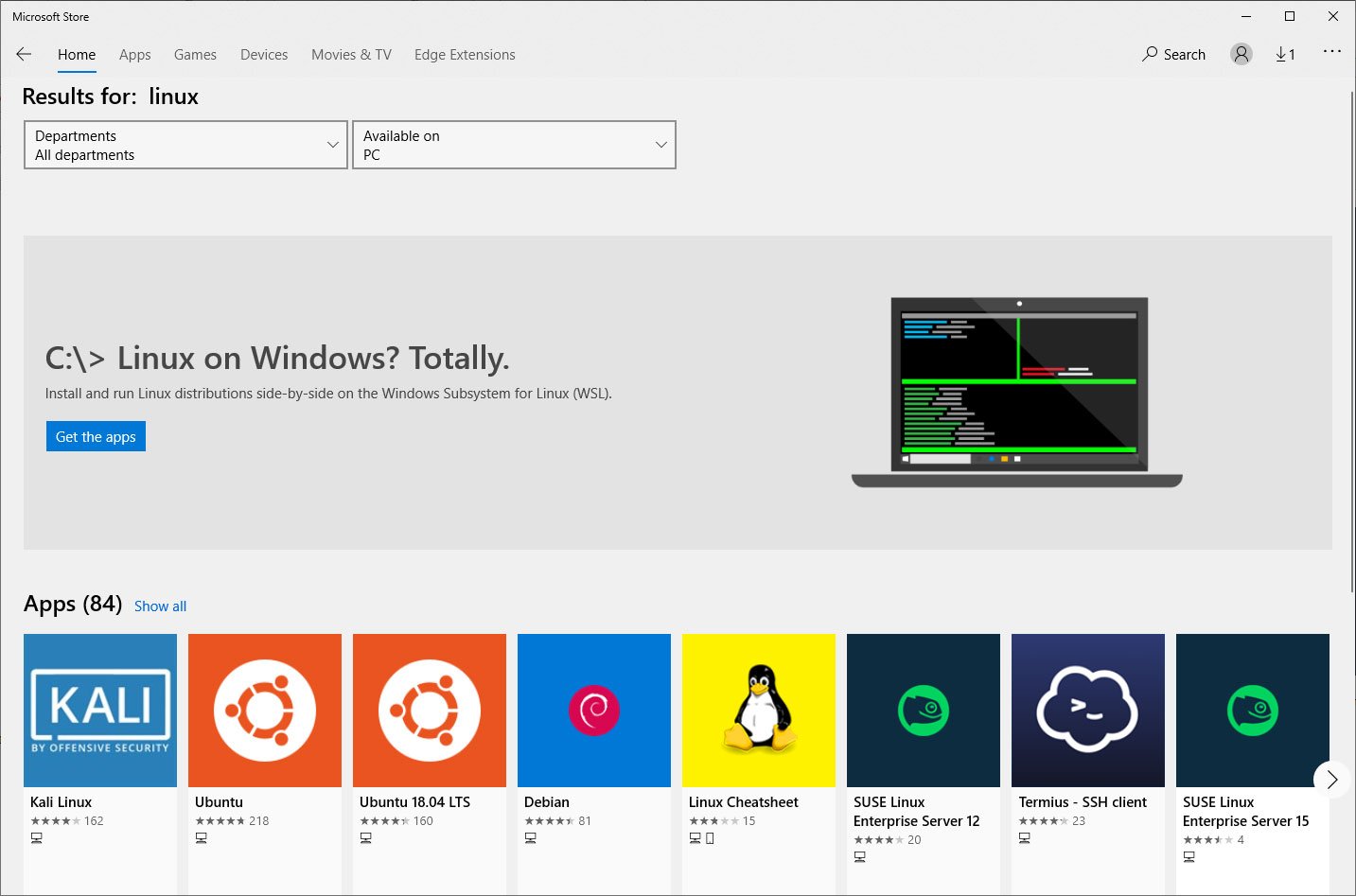
While Microsoft will be providing the Linux kernel, they will not provide any Linux binaries to go with it. Instead, users will still need to download their favorite Linux distribution from the Microsoft Store or by creating a custom distribution package.

While the source code for the kernel will come from Kernel.org, Microsoft has stated that they will apply custom patches that reduce the memory footprint of the kernel and provide hardware compatibility.
"In addition to the LTS source from Kernel.org, a number of local patches are being applied. These patches tune the resulting binary for use in WSL2 by improving launch times, reducing the memory footprint and curating a minimal set of supported devices. The result is a small, lightweight kernel that is purpose built for WSL2 to be a drop-in replacement for the emulation architecture featured in the design of WSL1."
Increased performance with WSL2
In the first iteration of the Windows Subsystem for Linux (WSL1), Microsoft had to translate Linux system calls so they could communicate and work with the Windows NT kernel. With the use of a true Linux kernel, it is no longer necessary to use a translation layer and apps will have full access to their normal system calls.
Removing the translation layer not only improves compatibility for Linux apps, but also increase file system performance.
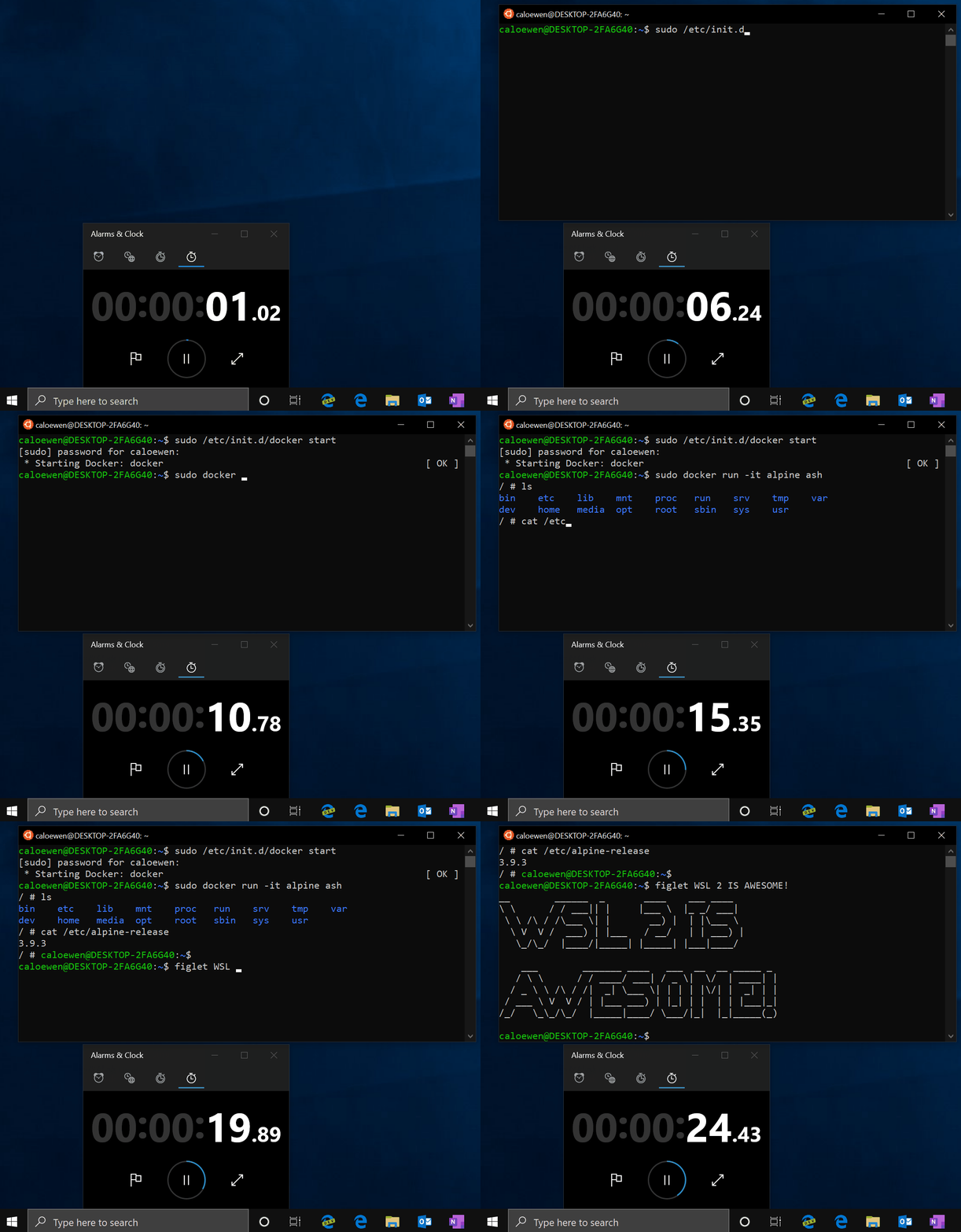
According to tests performed by Microsoft, the new Linux kernel has improved the performance of WSL, with unpacking archives up to 20x faster and tools such as npm, git, and cmake being 2-5x faster.
"File intensive operations like git clone, npm install, apt update, apt upgrade, and more will all be noticeably faster. The actual speed increase will depend on which app you’re running and how it is interacting with the file system. Initial tests that we’ve run have WSL 2 running up to 20x faster compared to WSL 1 when unpacking a zipped tarball, and around 2-5x faster when using git clone, npm install and cmake on various projects. We’re looking forwards to seeing speed comparisons from the community when we release!"
Below you can see a short video of WSL2 and its performance in Windows 10.
To make it easier to administer WSL2, Microsoft will also include the Linux kernel in Windows Update so that security updates and improvements will automatically be delivered to Windows 10.
For those who wish to contribute to the WSL2 kernel, Microsoft will be making it open source and will host it as project on GitHub. Microsoft will also be providing build instructions so developers can create their own customized kernels.

Break down IAM silos like Bitpanda, KnowBe4, and PathAI
Broken IAM isn't just an IT problem - the impact ripples across your whole business.
This practical guide covers why traditional IAM practices fail to keep up with modern demands, examples of what "good" IAM looks like, and a simple checklist for building a scalable strategy.






Comments
ranchhand_ - 6 years ago
Yeah, and how much is M/Soft going to charge for their Linux bastard son, considering they got it free.
GT500 - 6 years ago
It's been a free feature thus far.
Hard for them to charge for it considering that you can just install open source virtualization software on Windows, then install whatever Linux distro you want in a VM. It's hard to compete with something that's 100% free.
TsVk! - 6 years ago
Embrace, expand and extinguish maybe?
https://en.wikipedia.org/wiki/Embrace,_extend,_and_extinguish
Warthog-Fan - 6 years ago
Buy Windows 10 and get Linux for free? No thanks. I've started to upgrade my computers to MX Linux 18. Since I'm not a power user, this distro should give me everything that I need at the right price (free).
NickAu - 6 years ago
Hell just froze over.
mremski - 6 years ago
You all seem to have missed this part:
"...In addition to the LTS source from Kernel.org, a number of local patches are being applied...."
Kernel source is still GPL, right? Up to GPLV3, no? Then those patches have to be made available or MS can (and likely would) get sued.
gartral - 6 years ago
"You all seem to have missed this part:
"...In addition to the LTS source from Kernel.org, a number of local patches are being applied...."
Kernel source is still GPL, right? Up to GPLV3, no? Then those patches have to be made available or MS can (and likely would) get sued."
hey, i love to verbally kick Microsoft in the pants as much as the next guy, what with having literally no QA dept. and absolutely pants-on-head stupid licensing in the datacenter not to mention literally bundling a keylogger into their OS... but I AM going to play Devil's Advocate here and give them a point in the "well, it's a step in the Right Direction" category and raise a cup to hoping that they continue to stay on this path. Time will tell and I'm EXPECTING them to make a lot of brains ache, but I hope they don't play anal-ostrich this time.
Lawrence Abrams - 6 years ago
It was mentioned: "While the source code for the kernel will come from Kernel.org, Microsoft has stated that they will apply custom patches that reduce the memory footprint of the kernel and provide hardware compatibility."
According to Microsoft everything will be open sourced.